
Buy 3 to 6 Rights Ready Clips: TikTok UGC Trends 2026 for Marketers
Buy briefed rights ready batches of 3 to 6 TikTok videos, use agentic AI to scale, and run short paid tests to prevent creative decay.
The single most important TikTok UGC trend for 2026 is not a format or a filter. It’s operations: brands are buying briefed batches of three to six videos with paid usage rights, scaling concepts with agentic AI, and letting paid testing (not gut feel) decide what runs. Do three things now: buy rights alongside every asset, build a monthly refresh cadence instead of one-off orders, and route every new creative through a short paid test before you trust it with real budget.
TL;DR:
- Brands are now commissioning small batches of three to six videos for precise objections, often including paid usage rights and raw footage upfront.
- Artificial intelligence tools like Symphony Agent scale creative variation testing quickly, while human creators remain essential for trust-dependent formats.
- TikTok’s evolving algorithm favors early engagement, making quick, hook-focused videos and immediate whitelisting of organic winners crucial for reach and conversion.
- Maintaining a continuous pipeline of fresh assets is necessary due to creative decay, with a focus on process-driven and niche-specific content outperforming polished videos.
- Instant-ugc platform enables rapid AI-generated UGC from photos or screenshots in under two minutes, drastically reducing traditional production times and costs.
Table of Contents
- What Is Driving TikTok UGC Trends for 2026?
- Why These Trends Matter: The Data Behind the Shift
- How to Build a Briefed, Rights-First UGC Pipeline
- Using TikTok’s AI Tools and Creator Networks Without Losing Trust
- Measurement That Actually Predicts Creative Decay
- A Publisher’s Take: Mapping the Playbook to AI-Generated UGC
- Emerging Content Themes and Niches for UGC in 2026
- How TikTok’s Algorithm Changes Are Reshaping UGC Visibility
- Building Community Through UGC, Not Just Content
- What Successful 2026 UGC Campaigns Are Likely to Look Like
- Editorial Recommendation: The One Strategy to Commit To Now
- Get Briefed, Rights-Ready UGC Without the Three-Week Wait
- Sources
- FAQ
What Is Driving TikTok UGC Trends for 2026?
Marketers who ask “what’s trending on TikTok” in 2026 are usually asking the wrong question. Formats shift weekly. What doesn’t shift is the operating model underneath them, and that model has changed more in the past year than in the previous three combined. TikTok itself pushed this shift by shipping agentic AI tools and creator network infrastructure, and brands that treat UGC as a one-off purchase rather than a pipeline are already falling behind.
Here are the ten trends shaping how brands buy, produce, and measure UGC on TikTok in 2026.
-
Short, native clips still win, but the window keeps shrinking. Ten to 45 seconds remains the sweet spot for TikTok UGC, with the strongest performers front-loading the payoff in the first two to three seconds. Longer explainer-style UGC still has a place for consideration-stage retargeting, but cold-audience creative that takes more than three seconds to state its point loses viewers before the hook lands.
-
Briefed batches replace bulk orders. Instead of ordering “20 UGC videos” and hoping some land, brands are commissioning three to six videos per batch, each assigned a specific job: one attacks a price objection, one demonstrates unboxing, one targets a skeptical comment theme. This rights-first buying model is the dominant 2026 shift, and it means fewer wasted assets and clearer attribution of what worked.
-
Agentic AI handles scale, humans handle trust. TikTok’s Symphony Agent generates and coordinates creative across Creative Studio, Content Suite, and TikTok One, letting teams spin up concept variations in minutes rather than weeks. The tradeoff: agentic output works best for testing angles and scaling proven concepts, not for the emotionally loaded, trust-dependent categories where a real face still converts better.
-
Custom Creator Networks formalize the “always-on” creator relationship. TikTok piloted this model with Starbucks, building curated, ongoing creator pools instead of one-off gigs. Expect more brands to build owned creator rosters rather than sourcing fresh talent for every campaign.
-
Spark Ads and whitelisting turn organic wins into paid assets. When an organic post performs, Spark Ads let a brand pay to promote that exact post using the creator’s engagement history and authenticity signal, and TikTok explicitly recommends this workflow for converting creator content into paid campaigns. A TikTok Spark Ads Creator approach makes this easier to systematize instead of chasing viral posts after the fact.
-
TikTok Shop and creator commerce blur the line between content and checkout. UGC increasingly needs a product link baked in from the start rather than bolted on later, and TikTok Shop product videos built around discovery and demonstration outperform generic testimonial clips when the goal is direct purchase.
-
Raw footage and usage rights are now non-negotiable line items. A cheap video without paid usage rights is not a bargain, it’s a liability once you try to run it as an ad. Every brief should specify rights duration, edit permissions, and whether raw footage is included for future recuts.
-
Creative decay forces a refresh cadence, not a one-time purchase. Paid TikTok accounts burn through creative fast, and teams that treat a video library as a static asset rather than a rotating supply chain watch performance sag within weeks.
-
Raw, unpolished content keeps beating polish. TikTok’s own trend pages continue to emphasize real process over curated perfection, reinforcing that a shaky handheld demo often outperforms a studio-lit ad.
-
UGC now doubles as an AI visibility signal. Detailed reviews and off-site creator mentions increasingly shape what AI assistants recommend, meaning UGC strategy overlaps with search and AI-discovery strategy in ways it didn’t two years ago.
Why These Trends Matter: The Data Behind the Shift
Skepticism about UGC hype is fair. The numbers, though, are hard to argue with. UGC-style paid social creative earns roughly 4.7 times the click-through rate of studio ads, at 56% lower cost per click, which is the kind of gap that changes a media plan, not just a creative brief.
That performance gap compounds once UGC moves beyond the ad itself. On-site UGC galleries lift conversion by around 140%, and brands that repurpose UGC across touchpoints (ads, product pages, email) see revenue per visitor rise by roughly 154%. Those are not marginal gains from a nice-to-have tactic. They’re the reason procurement teams are rewriting UGC contracts to demand cross-channel usage rights instead of single-placement licenses.

Statistic Callout: UGC-style creative delivers about 4.7x the CTR of studio ads at 56% lower CPC, while on-site UGC galleries drive roughly 140% higher conversion and a 154% lift in revenue per visitor when UGC appears across multiple touchpoints.
Three forces are compounding this shift heading into 2026:
- Platform infrastructure caught up to demand. TikTok’s Symphony Agent and Custom Creator Networks signal that the platform itself now expects brands to operationalize creative production, not hand-craft it.
- Creative supply costs are rising faster than budgets. Traditional UGC sourcing, at $500 to $2,000 per video with two to three week turnarounds, can’t keep pace with accounts that need dozens of fresh assets a month.
- Regulatory scrutiny is catching up to synthetic content. Updated guidance affects how brands disclose AI-generated or synthetic performers, and getting ahead of these rules now avoids scrambling later.
Gartner’s framing is useful here: treat AI as a coordination and scaling layer for creative operations, not a replacement for strategy. The brands winning in 2026 aren’t the ones generating the most videos. They’re the ones generating the right videos, fast enough to keep pace with decay, with the rights to actually use them.
How to Build a Briefed, Rights-First UGC Pipeline
Operationalizing UGC sounds abstract until you break it into steps you can run this quarter. Here’s the playbook.
-
Name the buyer jobs before you brief anything. List the top three to five objections or hesitations stopping people from buying: price, trust, fit, shipping time, whatever shows up in your reviews and support tickets. Every video in your next batch should be built to solve one specific job, not “showcase the product” in general terms.
-
Order in briefed batches of three to six videos. Each batch should include paid usage rights and raw footage as standard, following the rights-first buying approach that’s replacing bulk volume packs. Specify exactly which objection each video addresses so you can trace performance back to strategy, not just format.
-
Bake whitelisting and Spark Ads permission into the brief itself. Don’t negotiate usage rights after a video performs organically. State upfront that any asset may be run as a paid ad, whitelisted through the creator’s account, or repurposed across Meta and other channels.
-
Run short paid tests with matched landing pages. New creative needs a fair trial: same audience, same landing experience, same bid strategy as your control. Let the ad account’s actual cost-per-result decide the winner, not internal opinion in a Slack thread.
-
Size your creative pipeline with a simple formula. A reasonable starting point: creatives needed per month roughly equals your monthly TikTok ad spend divided by $10,000, multiplied by 10 to 20 creatives, then adjusted upward if your account shows faster decay. An account spending $30,000 a month lands around 30 to 60 fresh assets monthly before adjustment, which is exactly why manual sourcing at $500 to $2,000 per video breaks budgets fast.
-
Build a contract checklist and reuse it every time. Cover usage scope (which platforms, how long), edit permissions, renewal terms, exclusivity clauses, and the specific whitelisting window during which you can run the asset as a paid ad.
Pro Tip: Write your briefs around the objection, not the product feature. A brief that says “address the shipping-time complaint we get in reviews” produces a sharper, more testable video than one that says “show the product in use.”
Refresh cadence tools matter here too. Creative teams tracking ad fatigue triggers can spot decay before it shows up as a spend problem, giving you lead time to queue the next batch instead of reacting after CPA climbs.
Using TikTok’s AI Tools and Creator Networks Without Losing Trust
TikTok’s toolkit has expanded fast, and knowing what each piece is for matters more than knowing every feature exists. Symphony Agent generates and coordinates creative across Creative Studio and Content Suite, Content Suite’s AI Search helps surface high-performing organic content worth promoting, and Custom Creator Networks give brands a structured way to build ongoing creator relationships rather than one-off bookings.
The decision rule is straightforward: use synthetic or agentic tools for scale and concept testing, and reserve human creators for formats where authenticity is the entire point. Agentic AI shifts the real question from “can we generate this” to “should we generate this,” and disclosure requirements make that a business decision, not just a creative one.
Converting organic wins into paid assets follows a simple sequence:
- Monitor top-performing organic posts weekly, not monthly, since decay sets in fast.
- Request whitelisting permission from the creator before the post’s momentum fades.
- Launch the whitelisted asset as a Spark Ad within days, matched to a relevant audience segment.
- Track performance separately from your regular paid creative to see if organic-proven content actually converts differently.
Compliance can’t be an afterthought. Layered disclosure requirements now cover AI-generated or synthetic performers, with updated FTC guidance, EU AI Act transparency rules, and state-level mandates all applying different standards depending on where your audience sits. Build a checklist that covers disclosure labeling, provenance metadata on AI-assisted assets, and a running list of region-specific rules to recheck quarterly, since this is one of the fastest-moving areas of the entire UGC landscape.
Measurement That Actually Predicts Creative Decay
Five metrics matter more than the rest: click-through rate, cost per click, cost per acquisition, return on ad spend, and hold rate (the percentage of viewers still watching past the first few seconds). Frequency is the sixth, and it’s the one most teams ignore until performance already dropped.
Statistic Callout: UGC creative earns roughly 4.7x the CTR of studio ads at 56% lower CPC, a gap wide enough that most accounts should treat UGC as the default test creative, not the experimental one.
- Track frequency against a 2.5x rule of thumb: once average frequency crosses roughly 2.5 exposures per user without a performance dip, decay risk is manageable; beyond that, expect CTR to soften and CPA to climb.
- Calculate your replacement rate by dividing current frequency by your decay threshold, then use that ratio to decide how many new assets to queue each cycle.
- Structure tests with even traffic splits and let each variant run long enough to reach a meaningful sample before declaring a winner. Behavioral data on how audiences actually engage with content helps interpret whether a drop-off is a creative problem or an audience-fit problem.
- Promote winners into whitelisted Spark Ads immediately rather than waiting for a full campaign wrap.
A Publisher’s Take: Mapping the Playbook to AI-Generated UGC
The briefed batch and rights-first model described above assumes you can produce matched creative fast enough to keep pace with decay. That’s precisely the gap Instant-ugc is built to close.
- Instant-ugc generates 9:16 UGC-style video from product photos or app screenshots in 90 to 120 seconds, which fits the briefed-batch model far better than a two to three week traditional turnaround.
- Support for 17 languages and 10 or more customizable AI avatars means one briefed batch can be localized for multiple markets without re-shooting anything.
- Automatic script generation lets teams brief against a specific objection (price, trust, fit) and get on-message drafts back immediately, rather than relying on a creator to interpret loose direction.
Use Instant-ugc for scale and concept testing across batches; lean on human creators when a format’s entire value depends on unscripted, personal trust. A sensible pilot: brief one batch of AI-generated assets against a single objection, run it through a short paid test, and compare CTR and CPA against your current creative before expanding.
Emerging Content Themes and Niches for UGC in 2026
Process content is outperforming polish across nearly every category. “How it’s made,” behind-the-scenes sourcing, and founder-led explainer clips are converting better than staged lifestyle shots, especially in categories like skincare, supplements, and home goods where buyers are actively skeptical of marketing claims.
Comparison and “honest review” formats are also gaining ground, particularly UGC that openly names a competing product before explaining the switch. This works because it mirrors how people actually research purchases: side by side, with a stated reason for the decision. Categories with longer consideration cycles (SaaS, higher-ticket electronics, health devices) are seeing more multi-part UGC series that follow a single creator’s experience over days or weeks, rather than a single 30-second clip.
Micro-niche UGC is also growing inside broader categories. Instead of generic “pet product” content, brands are commissioning UGC specific to sub-audiences, senior dog owners, first-time cat adopters, multi-pet households, because narrower targeting produces sharper hooks and better hold rates. The same pattern shows up in beauty (specific skin concerns), fitness (specific injury recoveries or training goals), and food (specific dietary restrictions). Broad, generic UGC increasingly underperforms narrow, specific UGC, even when the narrow version reaches a smaller audience.

How TikTok’s Algorithm Changes Are Reshaping UGC Visibility
TikTok’s recommendation system increasingly rewards early engagement velocity, meaning the first hour or two after posting matters more than it used to for determining how far a video travels. UGC that front-loads its hook and gets fast comments or shares in that window gets pushed to wider audiences faster than technically polished content that takes longer to land.
This shift favors brands running structured tests over brands posting and hoping. If you’re already running paid tests to identify winning UGC angles, as the playbook above recommends, you have a head start: you know which hooks generate fast engagement before you ever rely on organic reach to prove it.
The algorithm also appears to weight watch-through behavior heavily, which is part of why hold rate has become such a critical metric. A video that loses viewers in the first three seconds struggles organically, not just in paid placements. That reinforces the same lesson from the trends checklist: the opening two to three seconds decide most of a UGC video’s fate, on both the organic and paid side of TikTok.
One practical implication: don’t treat organic posting and paid testing as separate workflows. A video that shows early organic engagement signals is a strong candidate for immediate whitelisting into a Spark Ad, since the algorithm has already told you the hook works before you spend a dollar on media.
Building Community Through UGC, Not Just Content
The strongest UGC programs in 2026 treat creators and customers as an ongoing relationship rather than a transaction. Custom Creator Networks, the model TikTok piloted with Starbucks, formalize this by giving brands a curated pool of creators they work with repeatedly instead of sourcing fresh talent for every campaign. That repetition builds a recognizable voice around a brand that one-off UGC purchases can’t replicate.
Encouraging customers to post their own unscripted content, and then resharing or whitelisting the best of it, does double duty: it produces genuine social proof and signals to your existing audience that participation gets rewarded with visibility. Brands running consistent reply and duet activity with customer posts see stronger repeat engagement than brands that only push outbound content.
Community-driven UGC also feeds back into product development and messaging. The objections and praise that show up organically in comments are often better brief material than anything a marketing team would draft from scratch. Treating your comment section as a research input, not just an engagement metric, keeps your briefed batches grounded in what customers are actually saying rather than what the brand assumes they’re thinking.
What Successful 2026 UGC Campaigns Are Likely to Look Like
The campaigns performing best in 2026 share a structure more than a style. They start with a named objection (price, trust, fit), commission a small briefed batch built specifically to answer it, secure paid usage rights and whitelisting permission upfront, and run a short paid test before scaling spend. That structure, not any single viral moment, is what separates repeatable performance from a lucky hit.
Expect the most cited success patterns in 2026 to combine organic-to-paid conversion (a post performs well organically, then gets whitelisted into a Spark Ad within days) with cross-channel repurposing, the same UGC asset showing up in the ad, on the product page, and in post-purchase email. That repurposing is where the 154% revenue-per-visitor lift tends to show up, since a single strong asset compounds in value the more places it appears.
Multi-part creator series, where one creator documents a product experience over several posts rather than a single clip, are also emerging as a durable format for higher-consideration purchases. They give buyers more proof points before checkout and give brands more surface area to test which specific moment in the story converts best.
Editorial Recommendation: The One Strategy to Commit To Now
Commit to rights-first briefed batches judged by paid testing, not vibes. Order one batch, run it against a measurement plan, and let the ad account decide within 30 days.
— Syno
Get Briefed, Rights-Ready UGC Without the Three-Week Wait
Everything in the playbook above assumes you can produce matched, on-brief creative fast enough to outrun decay. Instant-ugc closes that gap directly: instead of waiting two to three weeks and paying $500 to $2,000 per video for traditional UGC, you generate 9:16 video from product photos or app screenshots in 90 to 120 seconds, with automatic script generation built around the objection you actually briefed.
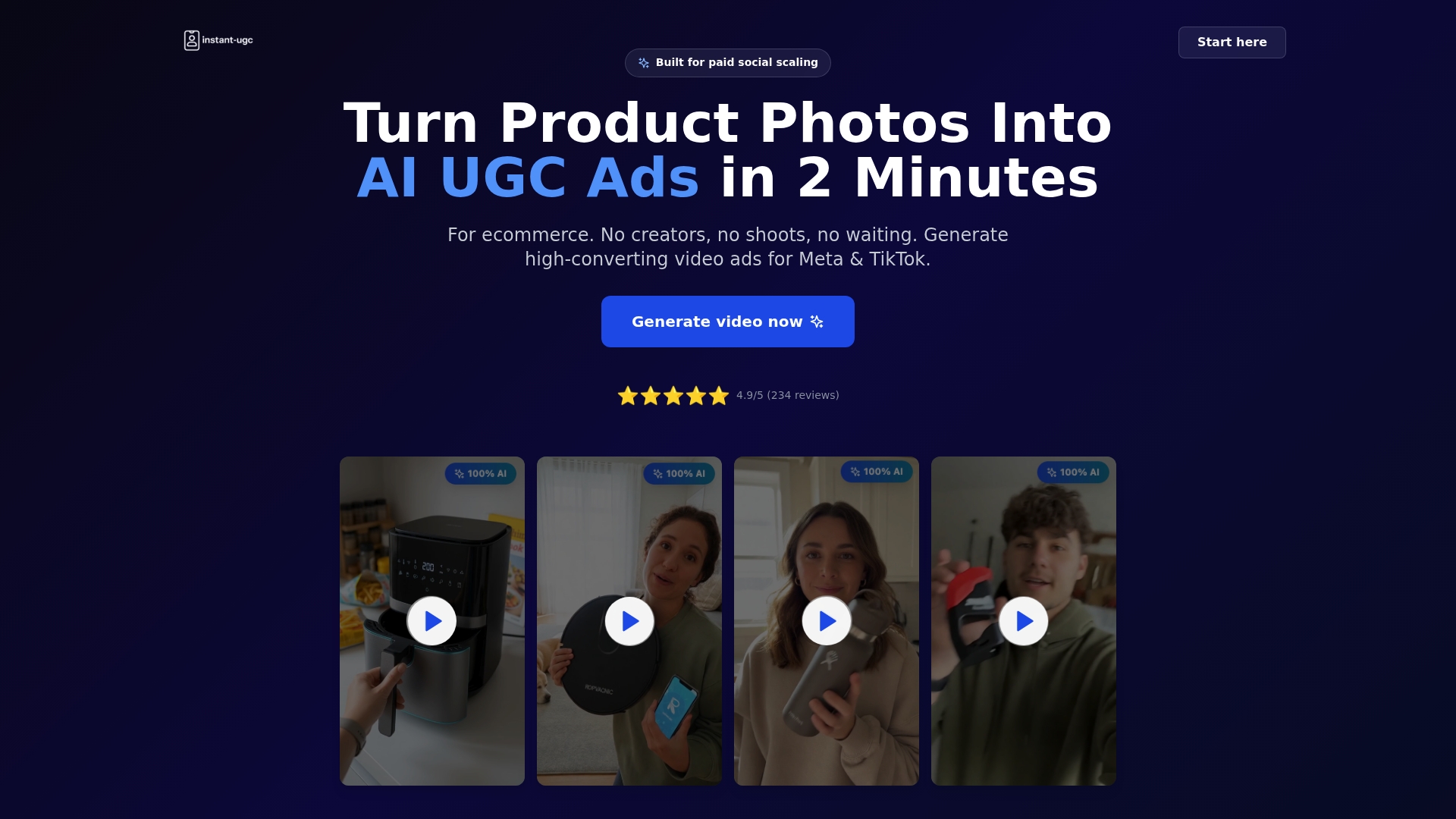
For teams running the briefed-batch model, a sensible pilot looks like this: generate 10 to 20 assets across your top three objections, using the platform’s multilingual video ads capability if you’re testing across markets, then run paid tests for two weeks and route winners into Spark Ads. Brands using the platform have reported ROAS climbing from 2.1x to 4.8x, a gap worth testing against your own account. If you’re specifically trying to accelerate creative testing cycles, start with a single batch on Instant-ugc’s Starter plan at $19 a month and measure the results against your current creative supply chain.
Sources
- User-Generated Content Marketing in 2026 | MarqOps
- TikTok UGC marketing guide | Shopify
- Introducing TikTok Symphony Agent - ChannelX
- UGC Marketing Trends 2026: What Brands Should Actually Change | Content Hall
FAQ
What Are the Current TikTok Trends for 2026?
The dominant trend is operational rather than stylistic: brands are buying briefed batches of UGC with paid usage rights, using agentic AI tools like Symphony Agent to scale concepts, and letting short paid tests decide what earns real budget. Raw, process-driven content continues to outperform polished studio ads.
How Many Views on TikTok Does It Take to Earn $1,000?
TikTok’s Creator Rewards Program pays based on watch time and engagement rather than a fixed rate per view, so there is no fixed view count that guarantees specific earnings. Payouts vary widely by niche, audience retention, and video length, which is part of why brands increasingly pay creators directly through briefed content deals instead of relying on platform payouts alone.
What Is the 3 Second Rule on TikTok?
The 3 second rule refers to the idea that a video’s hook needs to capture attention within the first three seconds or viewers scroll past it. This matters even more in 2026 since TikTok’s algorithm rewards early engagement velocity, meaning a weak opening hurts both organic reach and paid performance.
What Are the Top TikTok Trends Marketers Should Watch Right Now?
The highest-impact trends are briefed batches with paid usage rights, agentic AI tools for creative scale, Spark Ads whitelisting to convert organic wins into paid assets, and a strict refresh cadence to counter creative decay. UGC-style creative also earns roughly 4.7x the CTR of studio ads at 56% lower CPC, which is why it remains the default test creative for most paid accounts.
How Fast Can Brands Produce UGC-Style Video for TikTok in 2026?
Traditional UGC sourcing takes two to three weeks and costs $500 to $2,000 per video, but AI platforms have compressed that timeline dramatically. Instant-ugc, for example, generates 9:16 UGC-style video from product photos or screenshots in 90 to 120 seconds, with plans starting at $19 a month for teams testing the briefed-batch model at scale.
