
TikTok Ad Policies for Marketers: Compliance Checklist
Master TikTok ad policies with this essential compliance checklist. Safeguard your campaigns and boost success while meeting all guidelines.
TikTok ad policies are a tiered rule set that bans certain content outright, restricts high-risk industries, and enforces native-style creative and landing-page parity. Advertisers must satisfy all three tiers simultaneously or face rejection, reduced delivery, and account-level penalties. The official TikTok Ads Help Center at ads.tiktok.com is the canonical reference; every policy decision your team makes should trace back to it.
Three immediate actions to run before your next campaign launches:
- Audit rights and licenses: confirm you hold commercial rights to every audio track, image, and creator clip in your creative.
- Check landing-page parity: every claim in the ad must appear verbatim or be clearly supported on the destination page.
- Verify targeting: remove any audience segment built on sensitive attributes (race, religion, health status, political affiliation).
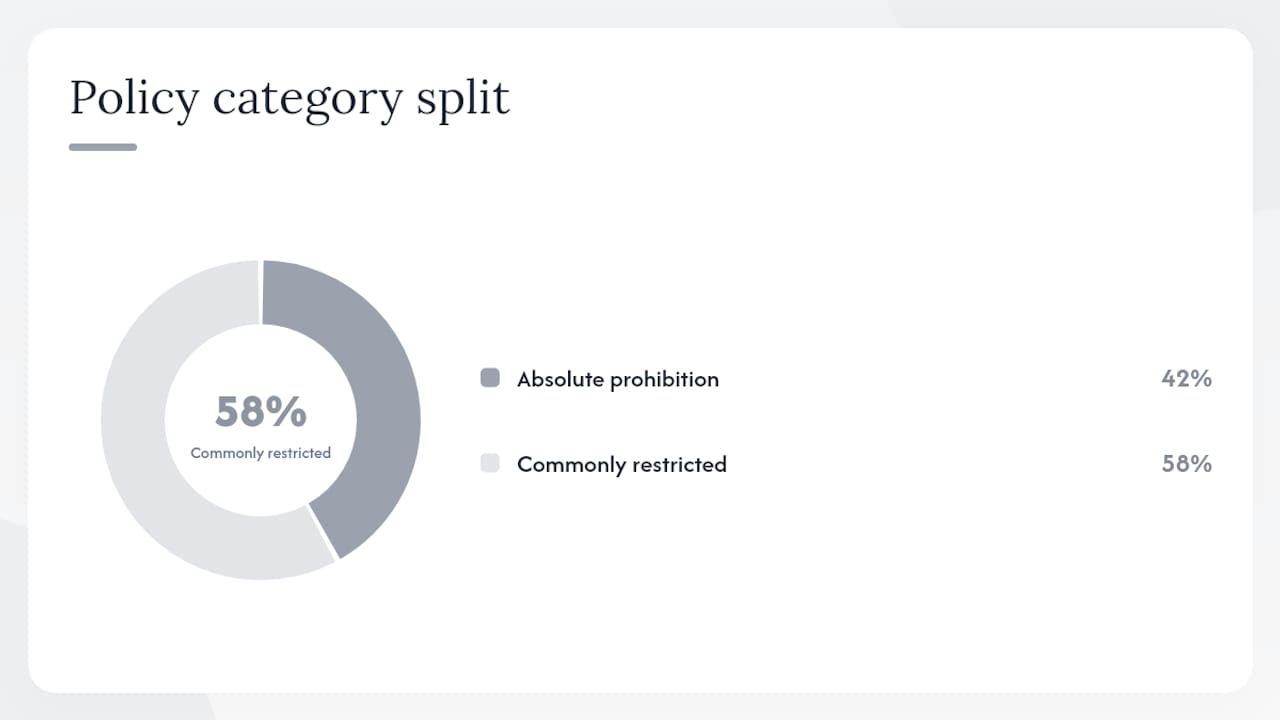
Absolutely prohibited categories (zero exceptions):
- Illegal goods and services
- Adult and sexually explicit content
- Graphic violence and dangerous activities
- Hate speech and discrimination
- Misinformation and deceptive claims
Commonly restricted categories in the U.S. (require pre-approval or certificates):
- Alcohol, gambling, financial services, healthcare and pharmaceuticals, weight-loss products, political advertising, and dating apps
Pro Tip: Bookmark ads.tiktok.com/help/ and set a calendar reminder to review it monthly. TikTok updates its advertising guidelines more frequently than most platforms, and a policy change can invalidate a creative that passed review last quarter.
Key Takeaways
TikTok ad policies operate across three simultaneous tiers, and a creative that passes one tier can still fail another if claims, targeting, or landing-page parity are off.
| Point | Details |
|---|---|
| Three-tier framework | Every ad is evaluated against prohibited content, restricted categories, and advertiser accountability standards at once. |
| Review timeline | Automated review clears most ads in minutes; sensitive verticals take 24–48 hours for manual review. |
| Top rejection triggers | Unlicensed audio, landing-page mismatch, misleading claims, and sensitive attribute targeting cause the majority of rejections. |
| Restricted industries | Financial services, healthcare, alcohol, and gambling require certificates or prior approval before ads can run in the U.S. |
| Instant-ugc | Instant-ugc generates format-optimized, native-feel TikTok video ads from product photos in minutes, reducing production time and common rejection triggers. |
Table of Contents
- What TikTok ad policies prohibit vs. restrict
- How TikTok’s ad review works and what to do when an ad is rejected
- Creative and technical specs that determine approval and delivery
- Targeting rules, data use, and non-discrimination requirements
- Which industries require certificates or prior approval?
- Intellectual property, deceptive claims, and misinformation rules
- Landing page and post-click rules TikTok checks after a user converts
- Enforcement outcomes and practical steps to lower policy risk
- End-to-end production workflow for policy-compliant TikTok ads
- Scale compliant TikTok creatives faster with Instant-ugc
- Sources
What TikTok ad policies prohibit vs. restrict
TikTok’s three-tier policy framework covers every ad simultaneously: prohibited content that is never allowed, restricted categories that require prior approval or documentation, and advertiser accountability standards that place compliance responsibility squarely on you.
Prohibited categories (absolute bans):
- Illegal goods, services, or activities
- Tobacco, e-cigarettes, and related products
- Adult content, nudity, and sexually explicit material
- Graphic violence, gore, and dangerous stunts
- Hate speech, discrimination, and content targeting protected groups
- Misinformation, fabricated news, and deceptive health claims
- Weapons, ammunition, and explosives
Restricted categories in the U.S. (conditional approval):
Per Sagum’s agency analysis, the industries most commonly requiring pre-approval include alcohol, gambling, financial services, and healthcare. In practice, U.S. advertisers also encounter restrictions on weight-loss and cosmetic procedures, political advertising, and certain dating services.
| Category | Typical approval requirement | Targeting constraints |
|---|---|---|
| Alcohol | Age-gating + market license | 21+ audiences only |
| Gambling | State license + TikTok approval | Geo-restricted to legal states |
| Financial services | Regulatory registration proof | No sensitive attribute targeting |
| Healthcare / pharma | License or certification | Age and geo restrictions apply |
| Weight-loss products | Substantiation documentation | Restricted creative claims |
| Political advertising | Varies by market | Limited in many regions |
Advertiser accountability standards sit on top of both tiers. They require that your landing page, billing disclosures, and privacy policy all match what the ad promises. A technically compliant creative paired with a misleading landing page still fails review.
How TikTok’s ad review works and what to do when an ad is rejected
TikTok’s enforcement model runs automated scanning first, then escalates to human moderators for sensitive verticals. Straightforward creatives often clear in minutes; ads touching restricted categories can take 24–48 hours for manual review.
Before you upload
- Confirm all audio is commercially licensed (not just free for personal use).
- Verify the landing page is live, loads over HTTPS, and contains every claim shown in the video.
- Check that no talent appears without a signed release.
- Remove any TikTok UI elements, fake engagement metrics, or platform watermarks from the creative.
- Confirm your account category matches the product being advertised.
Common rejection reasons and one-line fixes
- Misleading claims: Remove absolute guarantees (“will cure,” “guaranteed results”) and replace with substantiated language.
- Music license violations: Swap unlicensed audio for tracks from TikTok’s Commercial Music Library or a licensed third-party source.
- Landing-page mismatch: Update the destination page so every price, offer, and claim in the ad appears there too.
- Prohibited content: Review the banned category list and remove or replace the flagged element.
- Targeting violations: Audit custom audiences and remove any segment built on sensitive attributes.
Appeal workflow
- Open TikTok Ads Manager and navigate to the rejected ad.
- Click “Appeal” and select the rejection reason that most closely matches the notification.
- Attach supporting documentation: commercial music licenses, talent releases, regulatory certificates, or a screenshot of the updated landing page.
- Submit and monitor the appeal status; most decisions arrive within 24 hours.
- If the appeal is denied and you believe the decision is incorrect, escalate through TikTok’s business support channel with a detailed written explanation and all attachments.
Pro Tip: Keep a shared folder with your compliance documents organized by campaign. When you file an appeal, attaching the right license or certificate immediately cuts resolution time significantly compared to scrambling for documentation after the fact.
Creative and technical specs that determine approval and delivery
TikTok’s technical requirements cover both format specs and creative tone. Failing either one triggers rejection or delivery penalties.
Supported ad formats and key specs for U.S. campaigns
- In-Feed Ads: 9:16 vertical video, minimum 540×960 px, 5–60 seconds, MP4 or MOV. This is the workhorse format for most performance campaigns.
- TopView: Full-screen takeover on app open, up to 60 seconds. Higher production scrutiny applies.
- Spark Ads: Boost an existing organic post (yours or a creator’s, with permission). The original post’s engagement carries over, which helps delivery.
- Branded Hashtag Challenge: Community participation format; requires a dedicated campaign brief and TikTok sales team involvement.
- Branded Effect: Custom AR filter or effect; reviewed separately for brand safety and IP compliance.
“Native feel” and what review systems look for
TikTok’s algorithm and its review team both reward ads that look and sound like organic content. That means a person talking to camera, natural lighting, minimal on-screen text, and audio that fits the platform’s register. Ads that open with a product logo, a price callout, or a static banner consistently underperform and attract more scrutiny.
The 3-second rule is real: the first three seconds determine both review priority and user retention. Lead with a hook that creates curiosity or addresses a specific problem, not a brand name. Creatives that front-load a value proposition in natural speech clear review faster and hold attention longer.
Creative compliance checklist:
- Use only commercially licensed audio (TikTok Commercial Music Library or equivalent).
- Keep text overlays minimal and readable on a 5-inch screen.
- Obtain signed talent releases for every person appearing on camera.
- Avoid mimicking TikTok’s native UI (like/share buttons, follower counts, notification banners).
- Do not include fabricated social proof (“10 million sold,” “#1 in America”) without substantiation.
- Match the visual energy and pacing of organic content in your category.
For native-feeling hooks that also pass policy checks, the most reliable pattern is a direct-to-camera statement that names a specific problem your product solves, followed by a demonstration.
Pro Tip: Before finalizing audio, search the track in TikTok’s Commercial Music Library to confirm it carries commercial use rights. A track labeled “free” on a stock site may still be restricted on TikTok specifically, and music-related rejections are among the most common automated flags.
Targeting rules, data use, and non-discrimination requirements
Sensitive attribute targeting is prohibited on TikTok. You cannot build or use audiences that target or exclude users based on race, ethnicity, religion, sexual orientation, health status, political beliefs, or similar protected characteristics. This applies to custom audiences, lookalikes, and interest-based targeting alike.
Do’s and don’ts for custom audiences and retargeting
Do:
- Build retargeting lists from website visitors, app events, or customer email lists (with proper consent).
- Use lookalike audiences based on your best customers, keeping the seed list free of sensitive attributes.
- Apply age and geographic restrictions that match your product’s legal requirements.
Don’t:
- Upload customer lists segmented by health condition, political affiliation, or religion.
- Use interest categories as a proxy for protected attributes (e.g., targeting “religious content” to reach a specific faith group for a restricted product).
- Attempt to circumvent age restrictions by excluding younger users from a campaign that should not run to any minors.
Landing-page and privacy obligations for lead gen
TikTok’s lead generation policy requires a clearly displayed, easily accessible privacy policy link in the ad setup or on the landing page. For U.S. advertisers, that privacy policy must describe what data is collected, how it is used, and how users can opt out. The FTC’s guidance on endorsements and disclosures also applies: any material connection between an advertiser and a creator must be clearly disclosed in the creative itself, not buried in a caption.
Which industries require certificates or prior approval?
Several industries face heightened scrutiny in the U.S. and must complete TikTok’s Industry Entry process before ads can run. The most frequently affected categories are:
- Financial services: Investment products, loans, credit cards, and crypto require proof of regulatory registration (SEC, FINRA, state license, or equivalent).
- Gambling: Only legal in specific states; advertisers must provide a valid state gaming license and restrict targeting to jurisdictions where the activity is lawful.
- Alcohol: Requires age-gating to 21+ and, in some markets, a local distribution or retail license.
- Healthcare and pharmaceuticals: Prescription drug advertising requires FDA-compliant disclaimers; over-the-counter products need substantiation for any health claims.
- Weight-loss and cosmetic procedures: Claims must be substantiated; before-and-after imagery is heavily restricted.
- Dating apps: Require TikTok approval and must not target minors under any circumstances.
What to prepare before applying
- Gather your regulatory registration numbers or licenses (state, federal, or both depending on category).
- Draft the required legal disclaimers and confirm they appear on your landing page before submission.
- Prepare sample ad creatives that demonstrate compliant claim language.
- Document your age-gating mechanism and be ready to show how it works.
- Designate a compliance owner internally who can respond to TikTok’s follow-up requests within 48 hours.
Storing all of this in a single, version-controlled compliance folder means you can respond to a TikTok review request or an internal audit without delay. Market-specific variations matter here: a creative that passes review for one U.S. state may still be restricted in another if gambling or alcohol laws differ.
Intellectual property, deceptive claims, and misinformation rules
Music, logos, and creator content
Do:
- Use audio from TikTok’s Commercial Music Library or obtain a written commercial license from the rights holder.
- Get explicit written permission before reusing a creator’s organic content in a paid placement (Spark Ads require the creator to authorize the boost directly in the app).
- Use your own trademarked assets; reference third-party brands only in factual comparative contexts with legal review.
Don’t:
- Use trending sounds without verifying commercial rights. A track’s popularity on TikTok does not mean it is cleared for advertising.
- Include competitor logos or brand names in your creative without legal clearance.
- Repurpose user-generated content from comments or duets without written consent.
How TikTok evaluates claims
TikTok flags absolute or time-bound guarantees as potential misinformation. The platform’s review looks for language like “will cure,” “guaranteed to lose X pounds in Y days,” or “the only product that does Z.” Safer patterns include “may help support,” “results vary,” and “clinically studied” (only when a real study exists and can be cited). Financial claims follow the same logic: “potential returns” with a disclaimer is acceptable; “guaranteed 20% returns” is not.
Safer language patterns:
- “May help” instead of “will cure” or “eliminates”
- “Many customers report” instead of “proven to”
- “Up to X% off” instead of “always the lowest price”
- “Results may vary” as a visible disclaimer, not hidden fine print
If you are flagged for IP or misinformation
- Review the rejection notice for the specific claim or asset cited.
- Remove or replace the flagged element before resubmitting.
- If the flag is incorrect (e.g., you do hold the commercial license), attach proof in your appeal.
- For misinformation flags on health or financial claims, add a visible substantiation statement or disclaimer to both the creative and the landing page.
Landing page and post-click rules TikTok checks after a user converts
The review process does not stop at the creative. TikTok checks that the post-click experience is functional, honest, and consistent with what the ad promised.
Landing-page compliance checklist:
- Page loads over HTTPS with no certificate errors.
- All prices, offers, and claims in the ad appear on the page without material changes.
- Contact information (business name, address, or customer support link) is visible.
- A privacy policy link is present and accessible, especially for lead-gen campaigns.
- No auto-play audio, deceptive pop-ups, or forced redirects.
- Checkout and billing disclosures appear before the user is charged, not after.
| Element | Required practice | Reason for rejection |
|---|---|---|
| HTTPS | Valid SSL certificate, no mixed content | Flagged as insecure destination |
| Price consistency | Ad price matches checkout price | Bait-and-switch violation |
| Privacy policy | Linked and accessible on lead-gen pages | Lead gen policy requirement |
| Contact info | Business name and support channel visible | Deceptive advertiser identity |
| Billing disclosure | Shown before payment is processed | Consumer protection standard |
A landing-page mismatch is one of the most common causes of rejection or reduced delivery. TikTok’s automated review checks that specific claims shown in the video appear verbatim or are clearly supported on the destination page. If your ad says “free shipping on all orders” and the landing page shows a $5.99 shipping fee, expect a rejection or a lowered relevance score.
Enforcement outcomes and practical steps to lower policy risk
TikTok’s enforcement actions scale with severity and frequency. A single minor violation typically results in ad rejection. Repeated violations or a serious breach can trigger delivery reduction (your CPMs rise and reach drops without a formal notice), account suspension, or a permanent ban.
Enforcement triggers by outcome:
- Ad rejection: Prohibited content, misleading claims, landing-page mismatch, unlicensed audio, targeting violations.
- Reduced delivery: Borderline creative tone, high rejection frequency, low relevance scores from landing-page inconsistency.
- Account suspension: Repeated policy violations, operating in a restricted category without approval, fraudulent billing.
- Permanent ban: Severe or deliberate violations (illegal goods, CSAM, coordinated inauthentic behavior).
Team-level best practices
- Build a creative preflight checklist into your production workflow and require sign-off before any ad is uploaded.
- Assign a compliance owner who reviews policy updates monthly and flags changes to the creative team.
- Tag every campaign with the compliance documents used (music license ID, talent release file, certificate number) so appeals are fast.
- Track your rejection rate by campaign and by creative type. A spike in rejections is an early warning sign before account-level action occurs.
- Run a quarterly policy audit: pull your last 90 days of rejection notices and identify patterns.
Pro Tip: Monitor your appeal success rate alongside your rejection rate. A high appeal success rate means your creatives are borderline but fixable. A low appeal success rate means the violations are substantive and the creative strategy needs a structural change, not just a quick edit.
End-to-end production workflow for policy-compliant TikTok ads
Follow the policy tiers, document every permission, and match every landing-page claim before you submit. That single sentence covers the majority of rejection scenarios.
Step-by-step production checklist
- Brief stage: Define the product claim, identify the policy tier (prohibited, restricted, or standard), and flag any restricted-category requirements before creative work begins.
- Legal clearance: Secure commercial music licenses, talent releases, and any required regulatory certificates. Store them in a shared compliance folder with version dates.
- Creative production: Shoot or generate the video in 9:16 format, lead with a native-feeling hook in the first three seconds, and keep text overlays minimal. For UGC-style TikTok ads, authentic-looking content consistently outperforms polished brand spots in both review speed and engagement.
- Preflight check: Run through the creative compliance checklist (audio, talent, claims, UI elements) and the landing-page checklist (HTTPS, price parity, privacy policy, contact info).
- Submission: Upload to TikTok Ads Manager, select the correct ad category, and attach any required certificates in the account settings before the campaign goes live.
- Monitor: Check review status within the first hour. Automated rejections often arrive within minutes; manual reviews take up to 48 hours.
- Appeal if needed: Use the appeal workflow described earlier, attach documentation, and resubmit the corrected creative simultaneously so delivery is not delayed.
Non-obvious compliance items
- AI-generated content: Avoid adding mock TikTok UI, fabricated engagement numbers, or any element that implies platform endorsement. These are frequent automated flags for deceptive practices.
- Creator usage releases: Even for organic UGC you repurpose into a Spark Ad, the creator must authorize the boost through the app. A verbal agreement is not sufficient.
- Music commercial rights: A track cleared for organic posting may not carry commercial advertising rights. Always verify in TikTok’s Commercial Music Library or with the rights holder directly.
Pro Tip: Keep a permissions audit trail as a living document: one row per asset (audio, talent, image, third-party logo), with the license type, expiration date, and file location. When an ad is flagged six months after launch, this document is what gets the appeal resolved in hours instead of days.
A brief case example
A home goods brand launched an In-Feed campaign featuring a creator demonstrating a kitchen gadget. The ad used a trending audio track pulled from the creator’s original organic post. TikTok rejected the ad within two hours for unlicensed music. Because the team had a preflight checklist, they identified the issue immediately, swapped the audio for a track from the Commercial Music Library, updated the landing page to match the “30-day free returns” claim shown in the video, and resubmitted within 90 minutes. The corrected ad cleared review the same day. Without the checklist, the team would have spent hours diagnosing the rejection reason and potentially missed the campaign launch window.
A marketer’s perspective on policy-first creative
The instinct to treat policy compliance as a constraint on creativity gets it backwards. The restrictions TikTok enforces, native feel, substantiated claims, landing-page parity, are exactly the conditions that make ads perform well organically. An ad that feels like a real person talking about a real product, with no fabricated social proof and no bait-and-switch offer, is not just policy-safe. It is what the algorithm rewards with lower CPMs and higher completion rates. The brands that scale fastest on TikTok are not the ones with the biggest budgets. They are the ones whose creatives look indistinguishable from organic content and whose compliance processes are tight enough that rejections are rare and appeals are fast. Policy work is not overhead. It is part of the creative brief.
Scale compliant TikTok creatives faster with Instant-ugc
Producing native-feeling, policy-safe TikTok creatives at volume is where most teams hit a wall. Traditional UGC production takes 2–3 weeks and costs $500–$2,000 per video. Instant-ugc cuts that to minutes and a fraction of the cost, generating 9:16 vertical videos from product photos or app screenshots using AI avatars and auto-generated scripts that match TikTok’s native register.
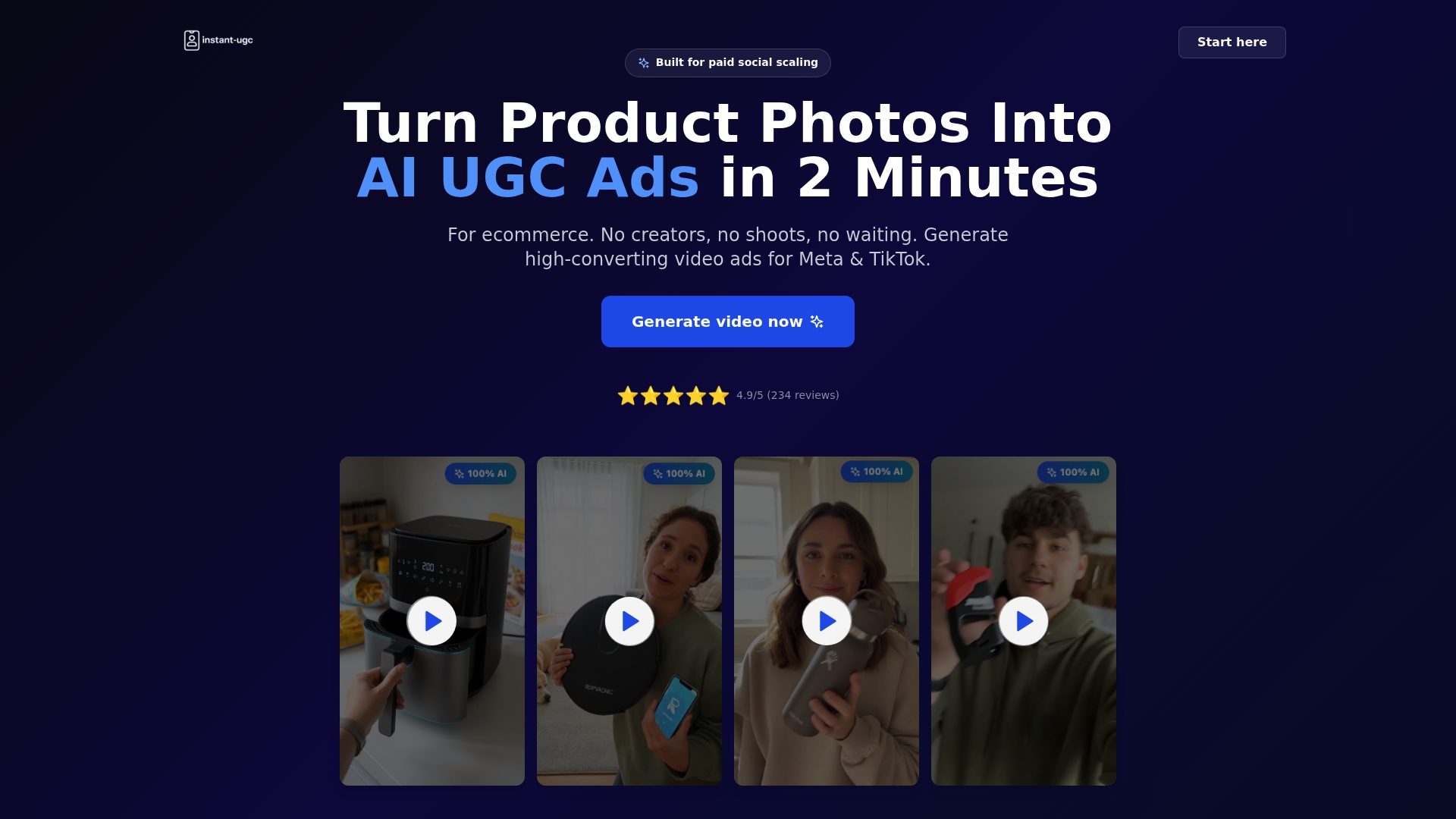
The platform’s AI TikTok ads generator outputs format-optimized creatives with audio options drawn from licensed sources, which removes one of the most common rejection triggers before you ever upload. It is not a substitute for legal clearance on restricted-category campaigns, but for standard e-commerce and app advertisers, it compresses the production-to-submission timeline dramatically. Brands using Instant-ugc report ROAS increases from 2.1x to 4.8x. You can start generating compliant, native-feel TikTok video ads today at Instant-ugc.
Sources
Keeping these sources current is the single most reliable way to stay ahead of policy changes:
- What are the ad policies and restrictions on TikTok? – Sagum
- TikTok Ads Policies 2026 : What Advertisers Must Know - TikAdTools
- TikTok Advertising Policies — TikTok Ads | ConductAtlas
Recommended
- TikTok UGC Ads: The Complete 2024 Guide to User-Generated Content Advertising | Instant-UGC Blog
- TikTok UGC Hooks 2026: The Ultimate Guide to Creating Scroll-Stopping Ads That Convert | Instant-UGC Blog
- AI TikTok Ad Generator: Transform Your Ad Creation in 2026 (Complete Guide) | Instant-UGC Blog
- Top Gadgets Video Hooks for TikTok Ads: Steal These Frameworks | Instant-UGC Blog
