
Multilingual Ad Scripts: AI Drafts Need Native Review
Learn why literal translations miss, how linguistic framing shapes ad performance, and how AI production and native review scale localized scripts.
The best way to write multilingual ad scripts is to create localized, purpose-built scripts for each target audience rather than relying on literal translation, then test and iterate based on real performance data. Research on linguistic framing shows that word choice changes click-through rates differently depending on product category, and production-aware tools like Instant-UGC make it practical to generate, test, and scale those variants quickly. The sections below walk through the process.
TL;DR:
- Use loss framing for supplements and health products, while cosmetics respond better to gain framing and visual language; test each category separately.
- Choose subtitles for gift or special occasion purchases, and consider dubbing for everyday personal purchases, because the adaptation method should match buying context.
- Lock prices, guarantees, and legal claims before adaptation, then simplify localized scripts because direct translations often expand and may exceed the original ad runtime.
- Localize creative that already performs well before building new concepts, then compare click through, conversion, and cost per result separately in each language.
- The video platform generates a finished vertical ad in 90 to 120 seconds, supports 17 languages, and offers 10+ avatars for split testing.
Table of Contents
- Why Multilingual Ad Scripts Matter for Performance and Brand
- Key Considerations Before You Write or Adapt a Script
- A Step-by-Step Process for Multilingual Ad Scripts
- Scaling Multilingual Scripts With AI-Assisted Workflows
- Where Automation Helps and Where Native Judgment Still Wins
- Instant-UGC generates a script along with a finished, 9:16 video ad in 90 to 120 seconds, ready for the testing step this guide covers.
- FAQ
- Sources
Why Multilingual Ad Scripts Matter for Performance and Brand
A direct translation might be grammatically correct and still fail commercially, because the language itself carries meaning beyond the words. Using a foreign language in an ad can act as an implicit country-of-origin cue, shifting how people judge quality, luxury, or trustworthiness before they even process the message. That effect alone can make or break how a product lands in a new market.
The stakes go further than tone. A large study of Japanese Instagram ads found that linguistic features affect click-through rates differently depending on what’s being sold.
Research on a large sample of Japanese Instagram ads found category-specific linguistic predictors of click-through rate, with supplements responding better to loss-framed language and cosmetics performing better with gain-framed, visual language. A script that works for a skincare brand won’t necessarily work for a vitamin brand, even in the same language.

When scripts match what an audience expects linguistically and culturally, we see the practical payoff show up where it counts: stronger click-through, better conversion, and ads that feel native rather than imported.
Key Considerations Before You Write or Adapt a Script
Before drafting a single line, we need to resolve a handful of decisions that determine whether a script will actually work once it’s localized.
- Cultural sensitivity: Local metaphors, humor, and references that land well in one market can confuse or offend in another, so each script needs a pass for taboo topics and cultural fit.
- Language nuances: Dialect, formality level, and code-switching expectations vary widely. A script written for Brazilian Portuguese needs a different register than one for European Portuguese.
- Brand voice boundaries: Decide what must stay fixed (legal claims, core CTAs, pricing) versus what can flex (tone, examples, humor) across markets.
- Technical constraints: Voiceover runtimes, subtitle reading speed, and text expansion in visuals all affect how a script fits its format.
- SEO and ad copy placement: Keyword placement in spoken scripts differs from written ad copy, so each format needs its own treatment rather than a shared draft.
- Quality assurance: Native review and back-translation catch errors that a single bilingual editor might miss, and these checks need a slot in the production timeline, not an afterthought.
A useful framework for resolving the cultural-versus-factual tension comes from research on marketing translation and localization, which argues that effective localization balances cultural relevance with claim integrity rather than treating translation as either a literal word-swap or a free rewrite. Separating what’s fixed from what’s flexible early on saves rework later. The runtime question deserves particular attention: scriptwriting guidance for bilingual productions notes that direct translations generally expand in word count, so scripts need simplification to fit the same time slot across languages.
Marketers working with Hispanic audiences specifically should also weigh how cultural accuracy affects trust and conversion, a theme explored in how culturally accurate content converts clients, which looks at bilingual engagement from a client communication angle.
Pro Tip: Build a one-page localization brief for every script that lists “locked” claims (price, guarantees, legal disclaimers) separately from “flexible” elements (tone, humor, visual metaphors) before any translator or AI tool touches the draft.
A Step-by-Step Process for Multilingual Ad Scripts
A repeatable process keeps quality consistent as you add languages, instead of reinventing the workflow for every market.
- Define audience segments and purchase contexts by language. Who buys in each market, and are they buying for themselves or for someone else? Research on dubbing versus subtitling found that matching the adaptation method to the purchase context improves brand evaluations, with subtitling helping when the ad involves gift-giving or special occasions.
- Choose a framing strategy per product category. Lean on loss-framing for health or supplement categories and gain-framing for aesthetic or lifestyle categories, following the category-specific patterns found in ad performance research.
- Write a localization brief that locks factual claims and flags flexible areas. This single document prevents translators or AI tools from accidentally softening a guarantee or exaggerating a claim.
- Decide the adaptation method per market. Some scripts need a straight translation, others need transcreation, and some perform best as native scripts written from scratch for that market.
- Plan for production constraints before you shoot or generate anything. Localization guidance from Meta’s developer team recommends locking strings early and building native scripts matched to footage rather than retrofitting captions onto an English master, since retroactive subtitles rarely fit well.
- Run language-specific or A/B tests, then scale what wins. Track click-through, conversion, and cost per result by language, and move budget toward the variants that perform.
Prioritizing which markets to test first matters too. A practitioner case study on scaling localization found that focusing localization effort on already high-performing pages, then expanding language coverage, improved conversions and lowered acquisition costs. The same logic applies to ad scripts: localize your best-performing creative into new languages before building something new from scratch.
Scaling Multilingual Scripts With AI-Assisted Workflows
Writing a strong script once is manageable. Writing a dozen strong variants across seven languages, on a weekly cadence, is where most teams stall. Automated script generation shortens the ideation phase considerably, giving teams a working draft to react to instead of a blank page, which makes it realistic to produce enough variants for genuine A/B testing.
Tools built for this stage typically offer:
- Multi-language coverage so the same product story can be adapted across major ad markets without starting over each time.
- Automatic script generation that produces a working first draft in minutes rather than days.
- Customizable avatars that let a single script be delivered in different visual presentations without reshooting.
- Format-optimized output built for vertical placements like Reels, TikTok, and Stories rather than repurposed horizontal footage.
The workflow that holds up best combines automation with human judgment: generate drafts quickly with an AI video generator, send them through native transcreation for any culturally sensitive copy, and run a final linguistic quality check before anything ships to a live campaign.
Where Automation Helps and Where Native Judgment Still Wins

Automation earns its place when you need scale and speed, generating enough script variants to test framing, hooks, and calls to action across languages in days instead of weeks. It falls short on anything brand-sensitive: humor, cultural references, and claims that carry legal weight still need a native speaker’s judgment, because that’s where literal accuracy and cultural fit diverge most.
The workflow we’d recommend is simple: let AI draft at volume, route anything culturally nuanced through transcreation, run a linguistic quality check, then test. Agencies report measurable productivity gains from this kind of hybrid AI workflow, and the pattern holds for ad scripts as much as for other content types.
— Syno
Instant-UGC generates a script along with a finished, 9:16 video ad in 90 to 120 seconds, ready for the testing step this guide covers.
- 17 supported languages so you can produce market-specific variants from a single product input.
- 10+ customizable AI avatars to deliver the same script in different presentations for split testing.
- Automatic script generation that gives you a working draft to transcreate rather than a blank page.
- Format-optimized output built for Meta, TikTok, and App Store placements.
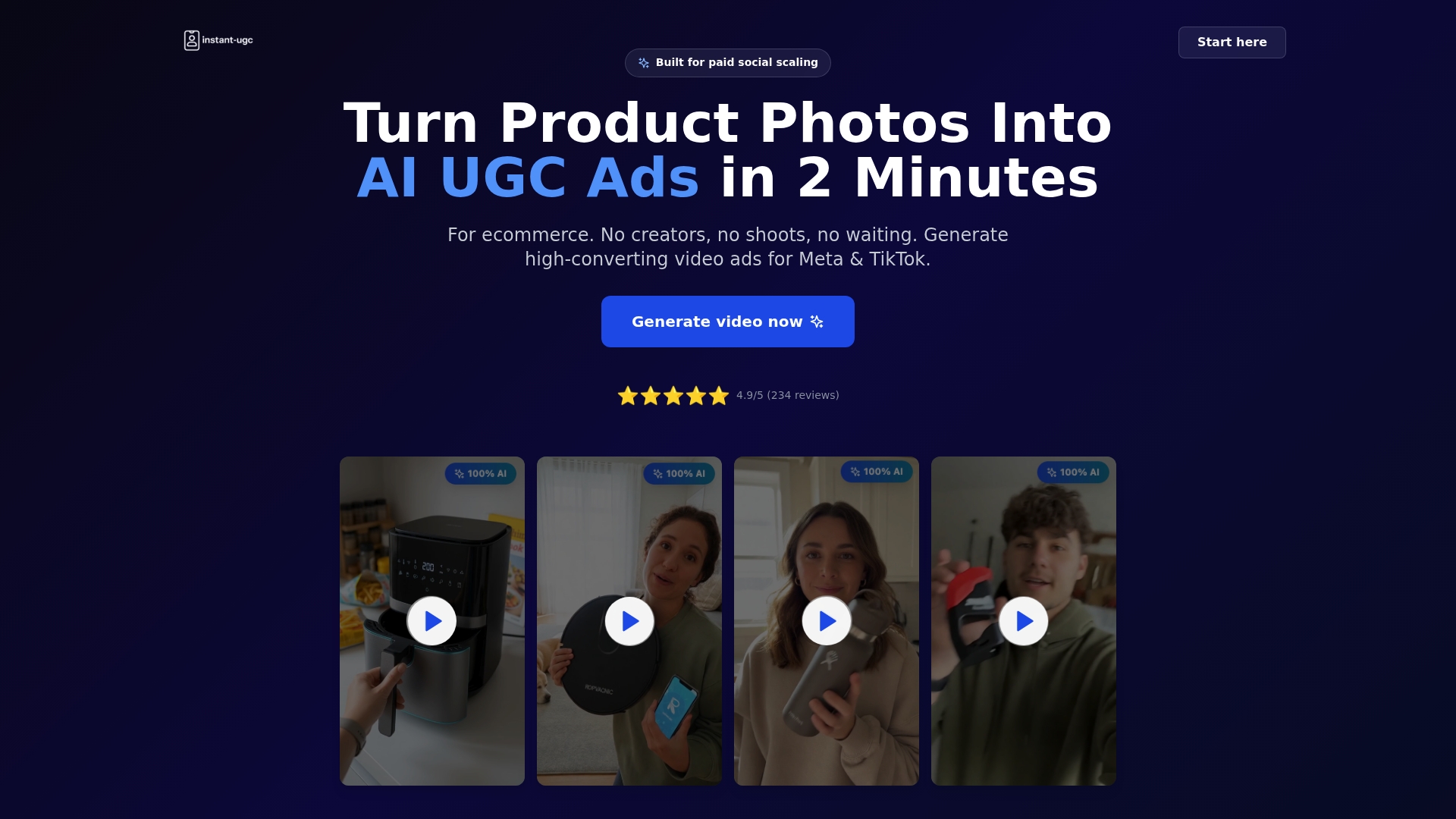
Explore how this works for your market on our multilingual video ads page, or start generating scripts and videos with a Starter plan.
FAQ
How long should a multilingual ad script run?
Keep spoken scripts within the runtime of your ad slot and expect non-English versions to run longer than the English draft, since direct translations tend to expand in word count. Simplify wording in the localized version rather than speeding up the voiceover to compensate.
Should I dub or subtitle a multilingual ad?
It depends on the purchase context: research on dubbing versus subtitling found that subtitling can perform better when the ad involves a gift or special-occasion purchase, while dubbing often suits everyday personal purchases. Match the method to how and for whom the product is being bought.
Does framing (gain versus loss) matter across languages?
Yes, and it varies by product category more than by language alone. Studies of ad performance found loss-framing works better for health and supplement categories, while gain-framing and visual language perform better for cosmetics and aesthetic products.
How do I test multilingual ad scripts effectively?
Run language-specific A/B tests rather than assuming a winning script in one language will win in another, and track click-through, conversion, and cost metrics separately per market. A structured testing system helps standardize how variants are compared before scaling budget toward winners.
Can AI tools generate multilingual ad scripts on their own?
AI tools can generate a strong first-draft script in multiple languages quickly, which is useful for volume and speed, but cultural nuance and legal claims still benefit from native review before launch. Platforms like Instant-UGC pair automatic script generation with a workflow built for this kind of rapid iteration.
Sources
- The impact of linguistic features on CTR in Instagram ads: a study of supplement and cosmetic products | PLOS One
- Cognitive and Affective Dimensions of Marketing Translation and Localization | Acta Globalis Humanitatis et Linguarum
- Foreign Languages in Advertising as Implicit Country-of-Origin Cues
- Scriptwriting Guidelines | Create Impactful Ads — AUDIOADS
Recommended
- Multilingual Video Ads | Create Videos in 50+ Languages
- Best Multilingual UGC Generator for Global Marketing: Create Videos in 175+ Languages
- UGC Ad Formats: Complete Technical Specifications and Platform Requirements for 2026
- Video Ad Creator AI: The Ultimate Guide to Creating Mobile-Optimized Ads in 2026
