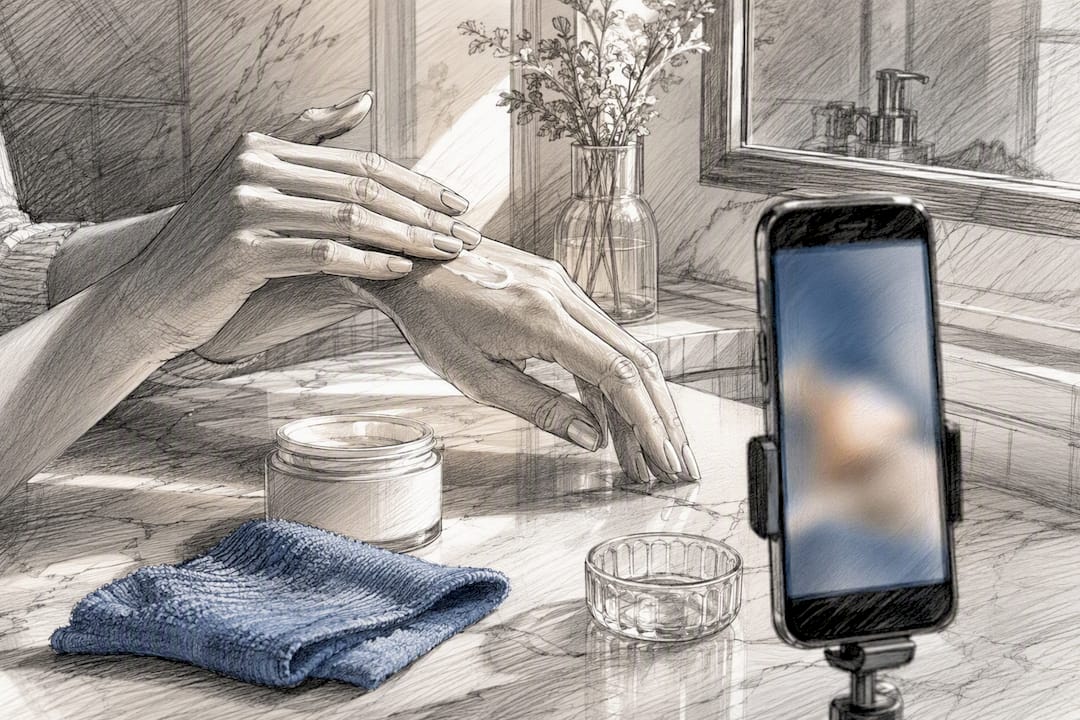
Create Beauty UGC Ads in 2–5 Minutes Without Sounding Staged
Learn hook-first openings, tight briefing templates, and creator criteria that avoid staged content, plus a 2–5 minute Instant-ugc workflow to scale...
Short, emotion-first testimonial, routine, and before/after clips consistently beat polished studio ads on beauty paid social. The winning move is to test them fast with tight briefs and disciplined A/B splits, rather than betting everything on one hero video. This article breaks down the exact formats, hooks, briefing templates, and creator-selection criteria that get you there, plus a production shortcut for scaling once you find a winner.
TL;DR:
- Testing multiple short, emotion-first, and result-driven UGC formats quickly with disciplined A/B splits leads to better performance than relying on a single hero video.
- Using compelling hooks such as emotional storytelling, curiosity lines, and immediate visual proof increases viewer engagement and thumb-stop rates across platforms.
- Clear creator briefs with specific objectives, must-have shots, and emotional guidance produce more authentic content than vague instructions, with proper file naming aiding efficient workflows.
- Relatable nano and micro creators offer the most authentic content at lower costs, but selecting creators with audience overlap and genuine engagement is crucial for conversions.
- Instant-ugc tools enable brands to generate ad-ready videos in minutes, boosting ROAS by shifting spend toward emotion-first, user-generated style creative.
Table of Contents
- High-Performing Beauty UGC Ad Formats That Convert
- What Should Beauty UGC Ads Open With?
- How Do You Brief Creators So Assets Come Back Ad-Ready?
- How Do You Choose the Right Creators for Beauty UGC?
- How Do You Scale and Test UGC Without Losing Authenticity?
- Why Emotion-First UGC Is Winning Right Now
- Instant-ugc: Ad-Ready Beauty UGC Without the Creator Bottleneck
- Sources
High-Performing Beauty UGC Ad Formats That Convert
Beauty brands running user-generated content in paid social consistently see higher web conversion rates than campaigns leaning only on studio-produced creative, according to Bentley University’s analysis of beauty influencer marketing. That advantage comes down to format choice. Some clips demonstrate results, others build relatability, and the strongest campaigns mix both.
Here’s what works for skincare and cosmetics, and why:
- Testimonial: A creator talks straight to camera about a specific result. Works because it reads as unscripted proof, not marketing copy. Opening beat: “I almost returned this until day 12.” CTA: “Link in bio before it’s gone.”
- Before/after: Split-screen or side-by-side skin transformation. Works because visual proof beats any claim you could write. Opening beat: silent 2-second flash of the “after” shot, then rewind to explain.
- Routine integration: The product slotted into a real morning or night routine. Works because it shows fit into an existing habit, not a one-off purchase. Opening beat: “Step 3 is the one everyone asks about.”
- Unboxing/first impressions: Genuine reaction to opening and first use. Works because first impressions feel unfiltered. Opening beat: “Okay, the packaging alone got me.”
- Ingredient spotlight: One active ingredient explained simply, with claims kept factual and non-medical. Works because it satisfies curious, ingredient-literate shoppers. Opening beat: “Nobody told me niacinamide could do this.”
- Hands-on demo: Texture, blendability, or application technique shown live. Works because it answers “how does this actually feel” better than any product photo.
- Shade swatch POV: Quick swipe-and-compare across skin tones. Works because it solves the single biggest hesitation in cosmetics: “will this shade match me?”
Ilia Beauty leaned into this shift hard, rebuilding its creative system around earned trust and reporting that UGC-style assets now drive the majority of its paid social revenue.
What Should Beauty UGC Ads Open With?
The first three seconds decide whether a viewer keeps watching or scrolls past, and beauty ads live or die on the hook, not the product shot. Five opener types consistently work across skincare and cosmetics:
- Emotion-first: Lead with a feeling, not a feature. “I cried a little when my skin finally calmed down.”
- Curiosity line: A half-finished thought that demands resolution. “The one thing my derm never told me about…”
- Immediate visual proof: Show the result before you explain anything.
- Founder or familiar face: A recognizable person builds instant trust, especially on Meta where audiences skew slightly older and more brand-aware.
- Shock-to-solution: Open on the problem (breakout, dullness, irritation) before pivoting to the fix.
TikTok rewards fast cuts and blunt curiosity lines; Reels tolerates a beat more polish; Meta feeds respond well to founder-led or testimonial opens. Jones Road tested this directly: shifting from ingredient-led openings to an emotion-first creative framework lifted its three-second hook rates and thumb-stop rates measurably. If a creator mentions a paid relationship or free product, that needs to show up in the caption or on-screen text. Skipping disclosure isn’t a style choice, it’s a compliance gap.
How Do You Brief Creators So Assets Come Back Ad-Ready?
Vague briefs produce vague content. The fix is a tight, reusable template that gives creators room to be themselves while locking down the pieces your ad account actually needs.
A workable brief includes:
- Objective: One sentence. “Show a first-time user solving redness within one week.”
- Must-have shots: Close-up of texture, on-face application, one “reaction” moment, final result.
- Tone/mood: Casual bathroom mirror energy, not a studio commercial.
- Hook examples: Give two or three lines the creator can riff on, not read verbatim.
- Legal guidance: No medical claims, no “cures” or “eliminates,” disclosure language required per FTC guidelines for influencer and UGC content.
- Deliverables: 9:16 vertical, 15 to 30 seconds, raw footage plus one edited cut, minimum 1080p.
File naming matters more than most teams admit. Tag exports with product SKU, creator name, and hook type (e.g., retinol_jane_emotionfirst_v1.mp4) so your ad ops team isn’t guessing which asset performed where.
Pro Tip: Give creators an emotional guardrail instead of a rigid shot list. Say “make me feel like I finally found something that works” rather than dictating every camera angle. You’ll get more usable, less staged footage that way.
Instant-ugc’s scripting guide for beauty brands walks through prompt structures that hit these same beats without a live creator shoot.
How Do You Choose the Right Creators for Beauty UGC?
Creator fit determines whether the finished video reads as genuine or forced. Cosmetics generally need what functions as a “taste proxy,” a relatable person whose reaction feels emotionally real, while clinical or treatment-adjacent skincare needs a knowledge proxy who can speak credibly about actives and results, per Eminence Organics’ analysis of creator-role fit. Mismatch the two and conversion suffers even with great production values.
Run every candidate through a short checklist:
- Audience overlap with your buyer, not just follower count.
- Content history that already looks native, not overly branded.
- Engagement quality: comments and saves, not just likes.
- Clear usage rights, and whether you need exclusivity or whitelisting.
- A production baseline: decent lighting and audio without a full studio setup.
Nano and micro creators typically run in the low hundreds of dollars per video and deliver the most relatable, least “ad-like” footage. Mid-tier creators with real audiences cost more but bring built-in reach. Founders and in-house experts cost nothing extra in creator fees but need coaching to avoid sounding scripted. Paid whitelisting or exclusivity rights add a separate line item, and they’re worth it only once you know a piece of content actually performs.
How Do You Scale and Test UGC Without Losing Authenticity?
Volume without measurement just burns budget faster. Track five metrics, weighted by what you’re optimizing for:
- Hook rate / thumb-stop rate: The percentage who watch past three seconds. Prioritize this when testing new creative concepts.
- View-through rate (VTR): How far viewers watch. Prioritize when testing formats or length.
- Click-through rate (CTR): Prioritize when testing calls to action or offers.
- CPA: Prioritize once you’re comparing creators or angles at similar spend.
- ROAS: The final scoreboard once a concept is proven.
Change one variable per test, hook, format, or offer, never all three at once, following the same logic Statohub’s guide to designing clean A/B tests lays out. Prioritize testing hooks first, since they gate everything downstream; test audiences second; test full creative concepts last, since they’re the most expensive to produce.
Once a 30-second UGC clip wins, cut it into a 15-second TikTok version, a static-frame carousel for Meta, and a landing page embed. Industry guidance on scaling UGC in beauty ecommerce consistently points to repurposing cadence, not raw creator volume, as the real defense against creative fatigue.
Why Emotion-First UGC Is Winning Right Now
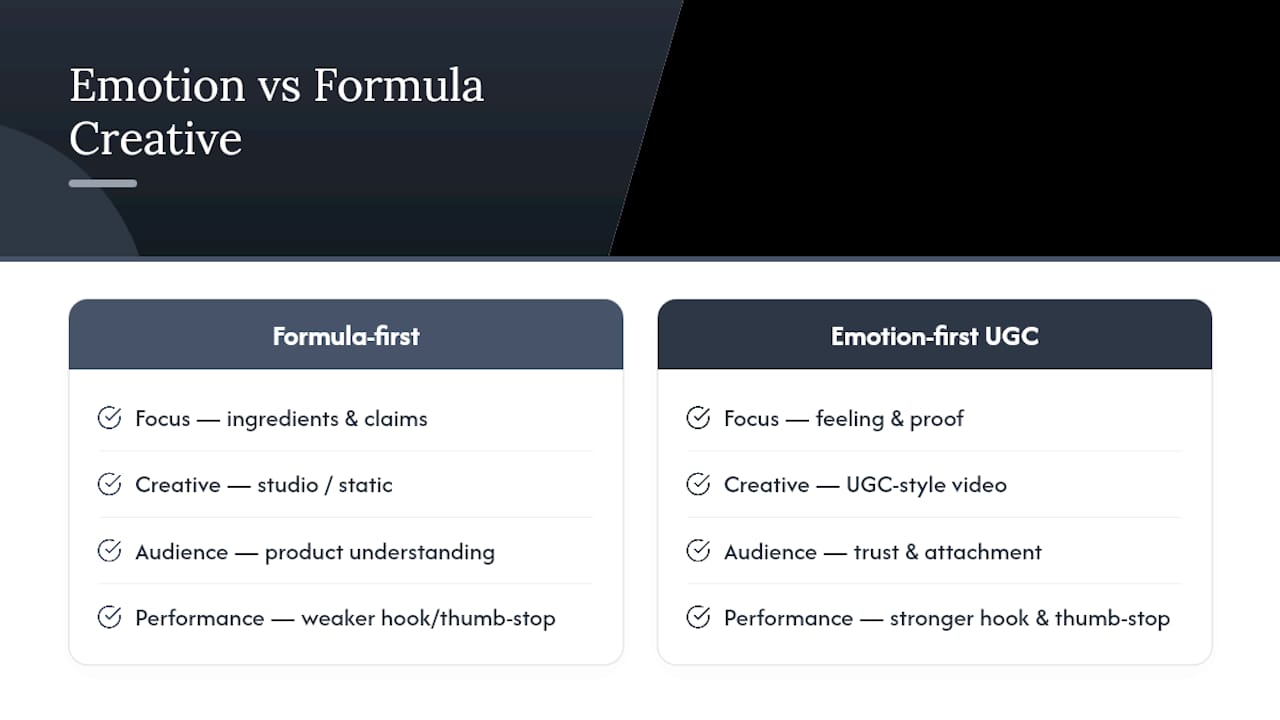
The clearest shift in beauty paid social over the past cycle is the move from ingredient-first demonstration to emotion-first proof. Jones Road’s rebuild around feeling over formula, rather than formula over feeling, produced measurably stronger hook and thumb-stop rates. That’s not a fluke; it tracks with how UGC builds cognitive trust and emotional attachment simultaneously in cosmetics markets specifically.
Brands using Instant-ugc report improved ROAS after swapping static or studio creative for UGC-style video. Test one funnel with three asset variants before committing a full budget.
— Syno
Instant-ugc: Ad-Ready Beauty UGC Without the Creator Bottleneck
Every format and hook above still runs into the same wall: sourcing, briefing, and waiting on creators takes time most beauty brands don’t have during a fast testing cycle. Instant-ugc closes that gap by turning a single product photo into a finished, ad-ready video in two to five minutes, with automatic script generation built around the same emotion-first structure that outperforms ingredient-led openings.
You pick from 10+ customizable AI avatars, generate in 17 languages, and export straight into 9:16 for TikTok and Reels or the formats Meta ad accounts expect. Brands report ROAS moving from 2.1x to 4.8x after shifting a chunk of spend toward this kind of UGC-style creative. If your priority is testimonial-style output, the testimonial and review video format is built specifically for that beat, and the before/after transformation format handles skincare results without a real photoshoot. For skincare and cosmetics specifically, start with the beauty and skincare UGC video category and generate your first three variants today.
